Korean Bibimbap
Uitgelicht onder: Wereldkeuken
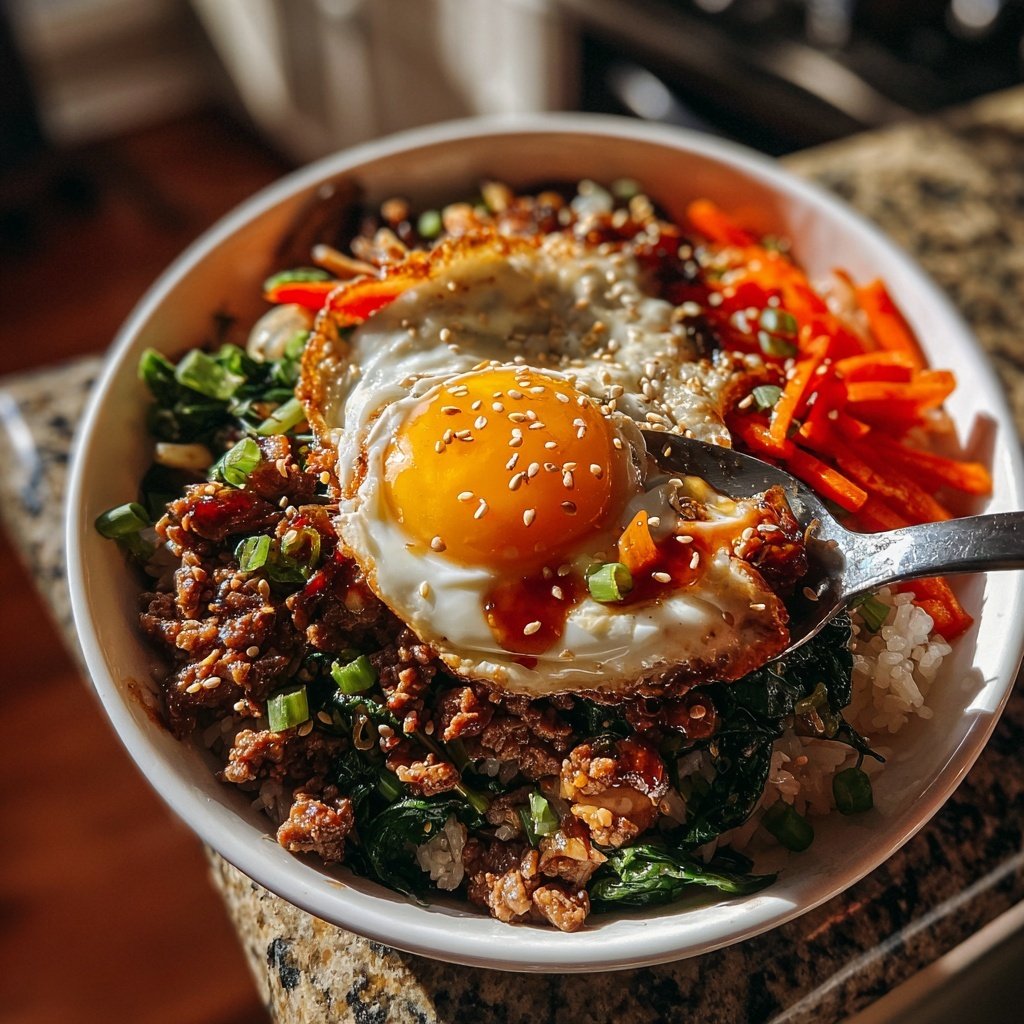
Korean Bibimbap is a vibrant and nutritious dish that combines rice, vegetables, and a variety of toppings, making it a delightful meal for any occasion.
Korean Bibimbap is a beloved comfort food in Korea, known for its colorful presentation and harmonious blend of flavors. Traditionally served in a hot stone bowl, it combines a variety of vegetables, marinated meat, and a fried egg, all topped with spicy gochujang sauce.
Why You Will Love This Recipe
- A medley of flavors and textures in every bite
- Customizable with your favorite vegetables and proteins
- Healthy and satisfying, perfect for lunch or dinner
Ingredients
For the Bibimbap
- 2 cups cooked rice
- 1 cup spinach, blanched
- 1 carrot, julienned
- 1 zucchini, julienned
- 1 cup bean sprouts, blanched
- 1 cup shiitake mushrooms, sautéed
- 2 eggs
- 2 tablespoons sesame oil
- 4 tablespoons gochujang (Korean chili paste)
- 2 teaspoons sesame seeds
- Salt to taste
Feel free to add any other vegetables or proteins you prefer!

Instructions
In a hot pan, sauté the zucchini and carrot separately until tender. Blanch the spinach and bean sprouts in boiling water for a minute, then drain and set aside.
Fry the eggs sunny-side up in a little sesame oil until the whites are set but the yolk is still runny.
In a bowl, layer the rice, then arrange the prepared vegetables and sautéed mushrooms on top. Place the fried egg in the center.
Drizzle with sesame oil and gochujang. Sprinkle with sesame seeds and a pinch of salt. Mix thoroughly before eating.
Enjoy your homemade Korean Bibimbap!
Serving Suggestions
Bibimbap is a dish that shines on its own, but pairing it with traditional Korean side dishes like kimchi or pickled vegetables can elevate your meal. These sides add an extra layer of flavor and texture, enhancing the overall dining experience.
For a refreshing beverage, consider serving bibimbap with a glass of cold barley tea or a light Korean rice wine. These drinks complement the flavors of the dish and provide a perfect balance to the meal.
Storage and Reheating
If you have leftovers, bibimbap can be stored in an airtight container in the refrigerator for up to three days. However, the texture of the vegetables may change slightly upon reheating, so it's best to enjoy it fresh.
To reheat, simply microwave the bibimbap until warmed through, or heat it in a pan over medium heat, adding a splash of water to prevent it from drying out. Top it with a freshly fried egg for a delicious, quick meal.
Vragen Over Recepten
→ Can I make bibimbap vegetarian?
Absolutely! Just omit the meat or replace it with tofu or additional vegetables.
→ What can I substitute for gochujang?
You can use sriracha or a mix of red pepper flakes and miso paste, but the flavor will vary.
→ Is bibimbap served hot?
Yes, traditionally it is served in a hot stone bowl, but you can enjoy it in a regular bowl as well.
→ How do I store leftovers?
Store leftover bibimbap in an airtight container in the refrigerator for up to 3 days. Reheat before serving.
Korean Bibimbap
Gemaakt door: Amelia Roberts
Recepttype: Wereldkeuken
Vaardigheidsniveau: Intermediate
Eindportie: 2 servings
Wat je Nodig Hebt
For the Bibimbap
- 2 cups cooked rice
- 1 cup spinach, blanched
- 1 carrot, julienned
- 1 zucchini, julienned
- 1 cup bean sprouts, blanched
- 1 cup shiitake mushrooms, sautéed
- 2 eggs
- 2 tablespoons sesame oil
- 4 tablespoons gochujang (Korean chili paste)
- 2 teaspoons sesame seeds
- Salt to taste
Stappen
In a hot pan, sauté the zucchini and carrot separately until tender. Blanch the spinach and bean sprouts in boiling water for a minute, then drain and set aside.
Fry the eggs sunny-side up in a little sesame oil until the whites are set but the yolk is still runny.
In a bowl, layer the rice, then arrange the prepared vegetables and sautéed mushrooms on top. Place the fried egg in the center.
Drizzle with sesame oil and gochujang. Sprinkle with sesame seeds and a pinch of salt. Mix thoroughly before eating.
Voedingswaarde (Per Portie)
- Calories: 500 kcal
- Total Fat: 18g
- Saturated Fat: 4g
- Cholesterol: 186mg
- Sodium: 600mg
- Total Carbohydrates: 65g
- Dietary Fiber: 5g
- Sugars: 5g
- Protein: 15g